Herman Miller Embody
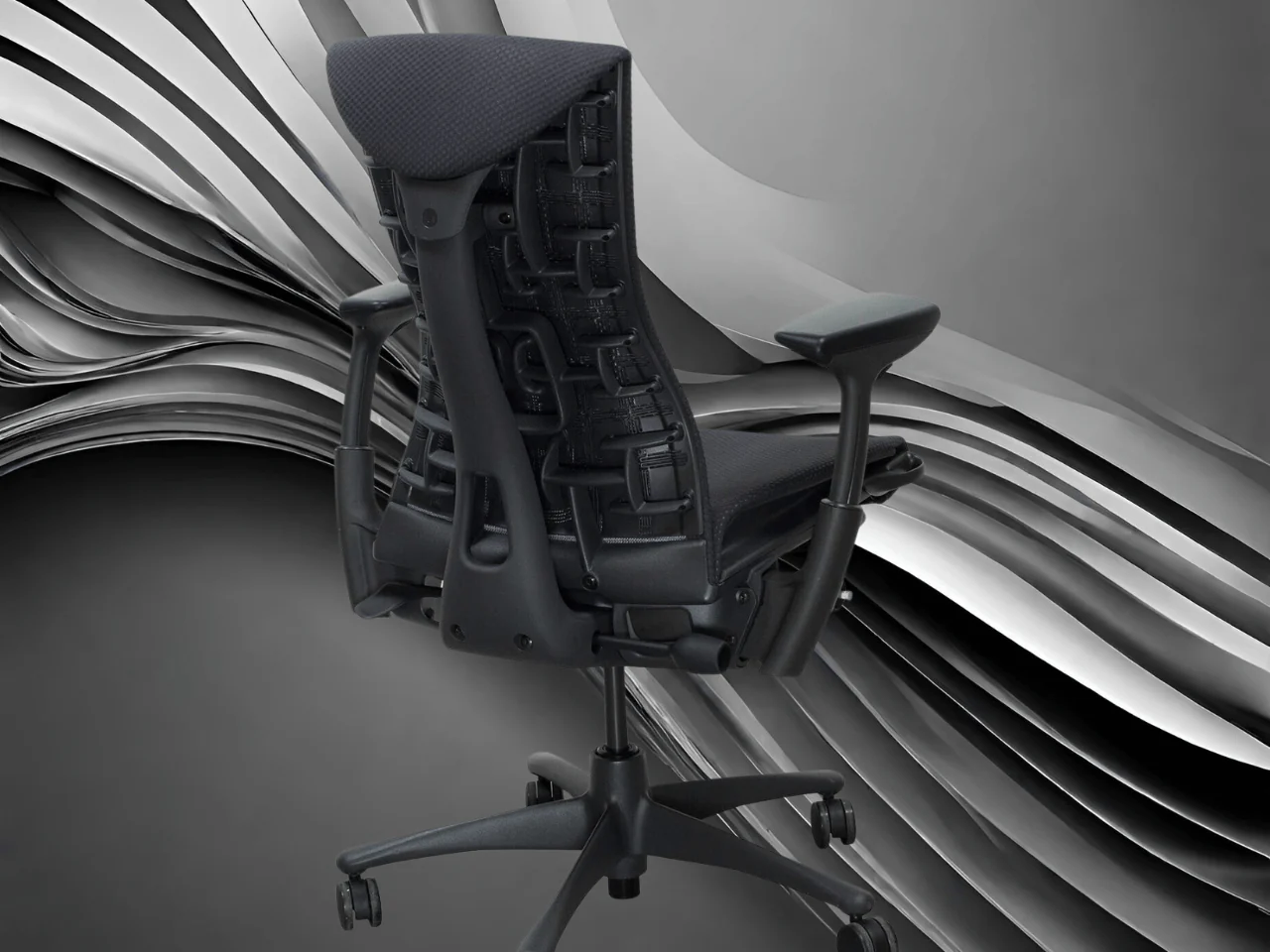
The Herman Miller Embody was designed around health rather than looks: a "pixelated" support matrix of hundreds of moving pixels distributes your weight and keeps you moving through the day, and a central spine mimics the human backbone. This guide covers the standard office Embody, how it differs from the Logitech G gaming edition, and what to check.
Chairpedia participates in the Amazon Associates program. We may earn a commission on qualifying purchases at no extra cost to you. Price, seller and stock are shown live on Amazon and are not verified by Chairpedia.
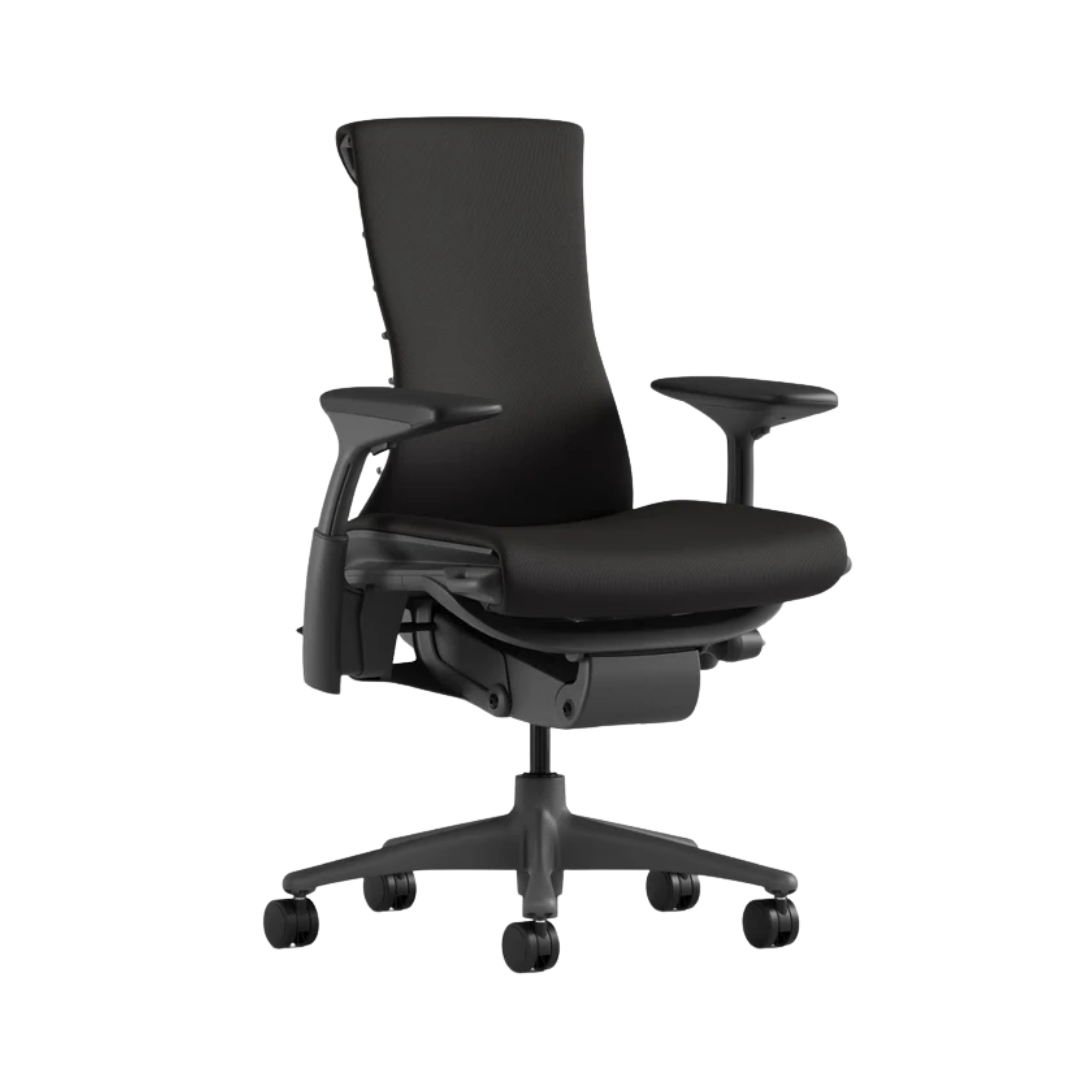
Check these before you buy
Embody has fewer configuration traps than most premium chairs, but a few choices — and the gaming vs standard question — still matter.
Dimensions and fit
Manufacturer figures come from the maker's official product page; we check them against the Amazon listing before treating them as confirmed. Values we can't confirm for the linked listing are marked as such — take those from the listing you buy from.
| Measurement | Documented value | Status |
|---|---|---|
| Overall width | ≈ 29.5 in | Not confirmed |
| Seat | ≈ 21.25 in W × 15–18 in D (adjustable depth) | Not confirmed |
| Seat height | ≈ 16–20.5 in | Not confirmed |
| Weight capacity | 300 lb | Manufacturer-documented |
| Support | "Pixelated support" — four layers over a dynamic pixel matrix; central spine | Manufacturer-documented |
| Recline | BackFit adjustment + tilt with a tilt limiter | Manufacturer-documented |
| Armrests | Height- and width-adjustable, or armless | Manufacturer-documented |
| Sizing | One adaptive size (no A/B/C) | Manufacturer-documented |
| Warranty | 12-year, 3-shift (per Herman Miller) | Manufacturer-documented |
Sources: store.hermanmiller.com, dealer spec sheets (e.g. btod.com) and published reviews (checked 2026-09-10). Overall/seat dimensions vary slightly by base and configuration and are dealer-sourced (marked "Not confirmed"); the support system, adjustments, 300 lb capacity and 12-year warranty are Herman Miller-documented.
Adjustable vs fixed
Design, ergonomics & build — in depth
The idea: a chair that keeps you moving
Embody was developed with a team of physicians and ergonomists around a simple premise — that healthy sitting is active sitting. Rather than locking you into one "correct" posture, its seat and back are built from a matrix of hundreds of small support points that flex independently, so the chair keeps adjusting to you as you shift through the day. A central spine runs up the back to mimic the human backbone and distribute load.
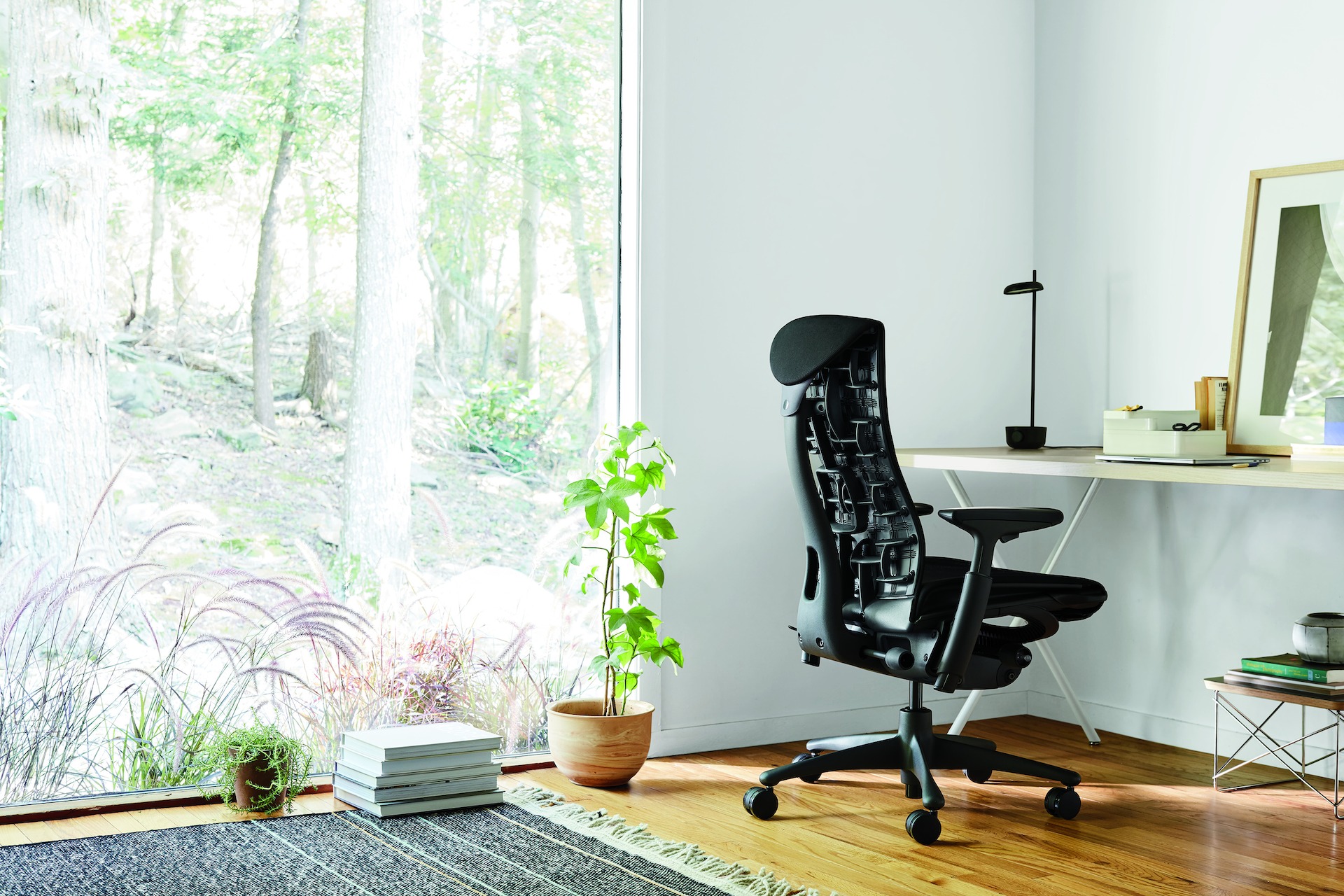
How it supports the body
The BackFit adjustment changes the curvature of the back to match your spine, and the tilt reclines with a limiter so you can cap how far it goes. Because there is no separate lumbar dial, support comes from the way the pixelated matrix and the spine load your back — a different philosophy from an Aeron's PostureFit, and one that rewards setting the BackFit properly before you decide how it feels.

Inside the seat and back
The "pixelated support" is four layers deep: the outer textile, then support layers that translate your movement into localised give. It's what lets the seat feel firm-but-forgiving and encourages the micro-movements the design is built around. Herman Miller rates the chair to 300 lb and backs it with a 12-year, three-shift warranty.
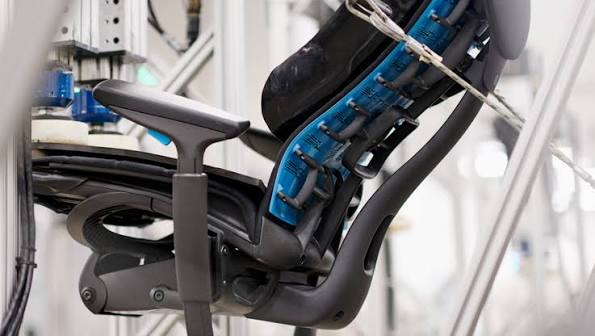
Living with it
Day to day, the appeal is that there is very little to fuss over: one adaptive size, a BackFit curve, a seat-depth slide and the arms. Reviewers consistently note it suits people who sit for long, focused stretches and lean forward to work; the trade-offs are a firmer, warmer seat than mesh and the absence of a headrest.
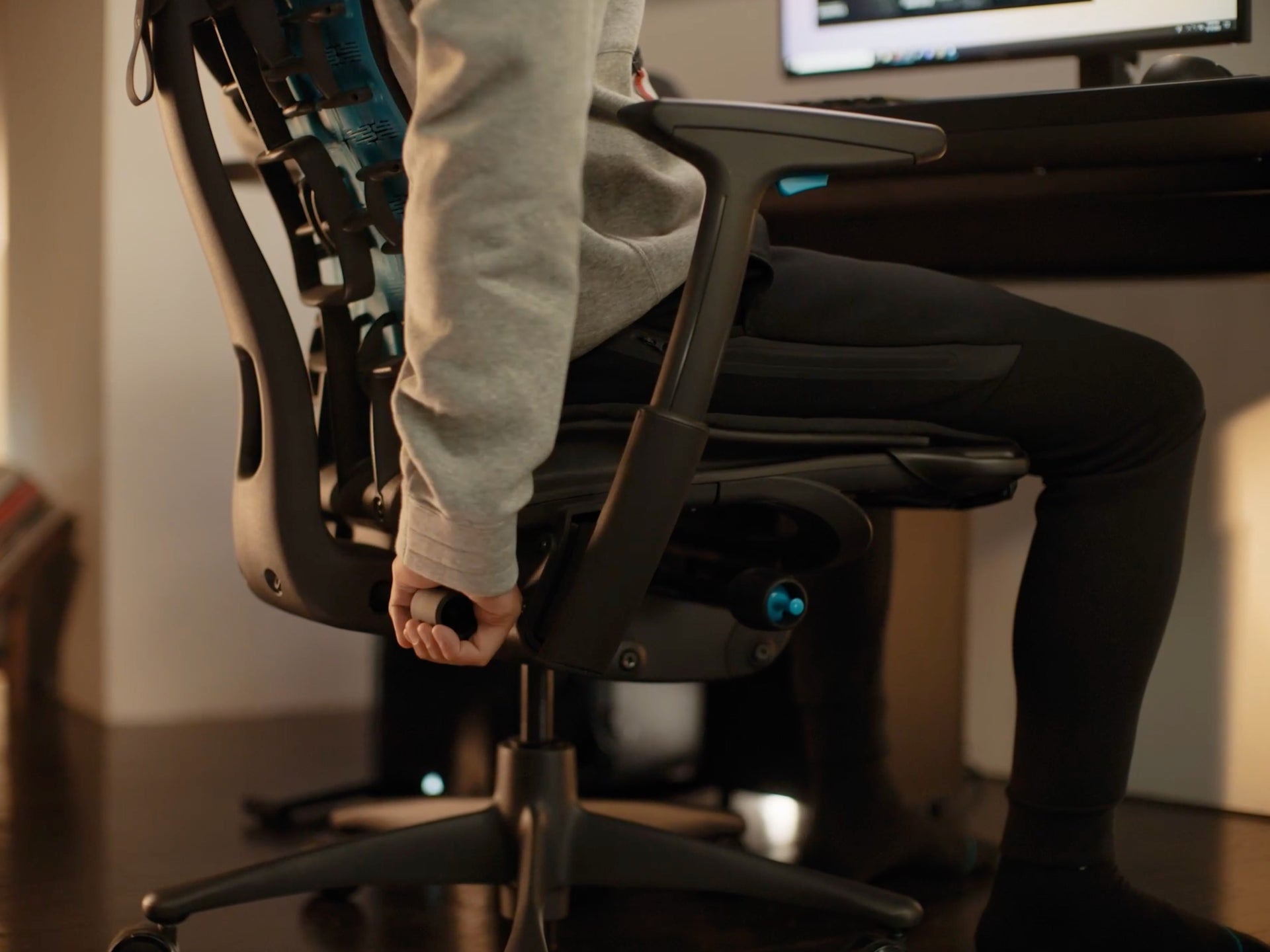
Standard Embody vs the Logitech G gaming edition
The Logitech G Embody shares this exact chassis, the same adjustments, the 300 lb capacity and the 12-year warranty. What it adds is a copper-infused cooling foam in the seat and thicker upper-back padding tuned for the forward-leaning posture gamers hold, in a limited set of dark colourways. For a work setup, the standard Embody gives you the full textile and colour range; the gaming edition is the one to choose if you sit forward and run warm.
Strengths and cautions
Drawn from manufacturer documentation and published reviews, not from our own use. Each point names its basis.
Who it's for, and who should skip it
Comparisons with key rivals
Rival figures are from published sources and are not verified by Chairpedia. Prices move constantly, so we link out instead of printing a number.
Scroll the table sideways to compare →
| Model | Lumbar | Armrests | Standout |
|---|---|---|---|
| Herman Miller Embody | Pixelated matrix + BackFit | Height + width / armless | Active-sitting support, one adaptive size |
| Herman Miller Aeron | PostureFit SL | Up to fully adjustable | All-mesh, three sizes |
| Steelcase Leap V2 | Adjustable LiveBack | 4D | Deep recline, upholstered, headrest option |
| Herman Miller Mirra 2 | PostureFit sacral | Fully adjustable option | Breathable, 350 lb, cheaper |
The bottom line
Embody is the health argument made into a chair. Instead of a lumbar dial and a size chart, it uses a "pixelated" matrix of hundreds of moving support points and a backbone-like central spine to distribute your weight and keep you subtly moving — the case being that motion, not rigidity, is what long sitting needs. One adaptive size, a BackFit curve you match to your spine, an adjustable seat depth and a 300 lb, 12-year-warrantied build round it out.
It asks you to accept its philosophy. There's no headrest and no separate lumbar knob, and the seat is firmer and warmer than mesh, so if you want a headrest, dial-in lumbar or an airy seat, the Aeron is the better Herman Miller. The gaming Logitech G edition is the same chassis with cooling foam and lean-forward padding — pick that if you sit forward and run warm. For active, all-day sitting in one size, few chairs are as considered.
Built to keep you moving, not locked in place — one adaptive size, no headrest, and a gaming twin that shares its bones.
Where to buy
Not verified by Chairpedia: price, seller, stock and whether a listing is the standard or gaming edition vary — confirm before buying. We link an Amazon search because Embody is sold in several configurations. The Amazon link is an affiliate link; the Herman Miller link is a direct, non-affiliate link.
Frequently asked questions
How is the gaming Embody different?+
The Logitech G Embody uses the same frame, adjustments, 300 lb capacity and 12-year warranty, but adds copper-infused cooling foam and thicker upper-back padding for forward-leaning postures, in limited dark colourways.
What is "pixelated support"?+
Embody's seat and back use a matrix of hundreds of small support points ("pixels") over four layers, which flex individually to distribute weight and encourage micro-movement.
Does Embody come in sizes?+
No — it's a single adaptive size. Fit comes from the BackFit, seat-depth and arm adjustments rather than an A/B/C size chart.
Is there a headrest or adjustable lumbar?+
No headrest, and no separate lumbar dial — support is shaped by the pixelated matrix and the BackFit curve. If you want those, look at the Aeron or a Steelcase Leap.
Has Chairpedia tested this chair?+
Not with our own instruments yet. This is a research-based guide from Herman Miller's specs, dealer sheets and published reviews; the deep-dive below adds context.
Sources
- https://www.hermanmiller.com/products/seating/office-chairs/embody-chairs/
- https://www.logitechg.com/en-us/products/gaming-chairs/embody-gaming-chair.html
Specifications combine Herman Miller documentation with dealer-sourced dimensions (marked "Not confirmed") as of the date shown and are not independently verified by Chairpedia. Embody is sold in standard and Logitech G gaming editions and several configurations — confirm the edition, arms, textile and casters on the listing you buy from.