KI Ruckus vs Herman Miller Aeron: Which Should You Buy?
Educational flexibility meets iconic ergonomics
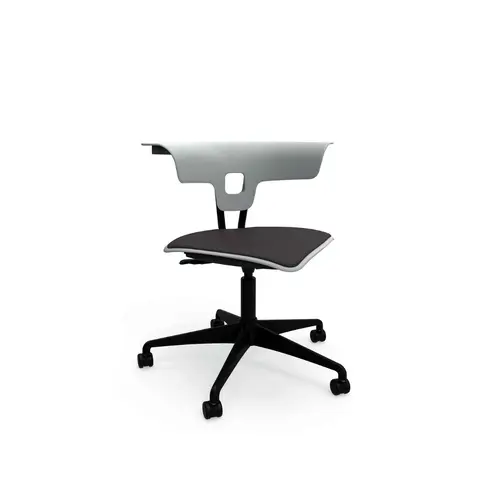
$1,326
lower starting price for KI Ruckus than Herman Miller Aeron at the brand stores
Differences at a glance
Sources
- Ruckus Collection Price List — Technical Specifications, KI ↗Checked Sep 29, 2026
- Aeron Chair – Specs (hermanmiller.com) ↗Checked Sep 26, 2026
- Ruckus Task Chair product page, KI ↗Checked Sep 29, 2026
- US Herman Miller Store (price) ↗Checked Oct 11, 2026
- Price
- $449 – $598$1,775 – $2,840
- Seat height
- 17.7–22.4 in (45.0–56.9 cm)14.4–19.3 in (36.6–49 cm); 14.8–22.8 in (37.6–57.9 cm); 15.8–22.8 in (40.1–57.9 cm)
- Seat depth
- 18.8 in (47.8 cm)16 / 17 / 18.5 in (40.6 / 43.2 / 47.0 cm)
- Arms
- Integral armrest functions as a support surfaceArm height 7.5–11.5 in (adjustable arms); 8.5 in (fixed arms); Options: Fully Adjustable Arms, Height-Adjustable Arms with Pivot, Height-Adjustable Arms, No Arms, Stationary Arms; Arm Height 7.5–11.5 in (Fully Adjustable Arms, specs page)
- Warranty
- Lifetime12-year, 3-shift warranty, with limited exceptions
Questions
Which is cheaper, the KI Ruckus or the Herman Miller Aeron?
The KI Ruckus is cheaper to start: $449 versus $1,775 for the Herman Miller Aeron at the brand stores (Sep 2026).
What do owners mention most?
Comfort for the KI Ruckus, and price and value for the Herman Miller Aeron, based on review summaries.
As an Amazon Associate I earn from qualifying purchases. Search links may include other models or accessories; confirm the exact item, seller and condition before buying.
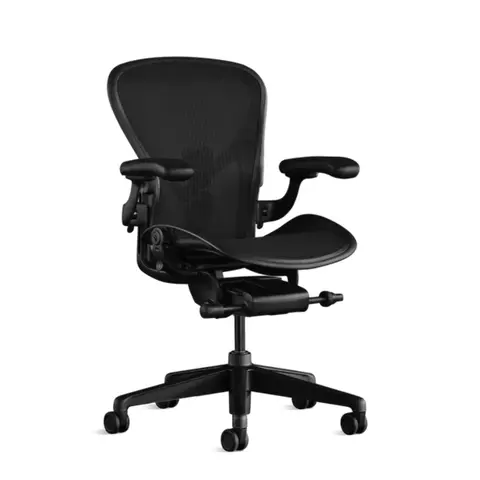
Choose the size and generation before comparing offers.
Choose Aeron size A, B or CRead the full comparison
Introduction
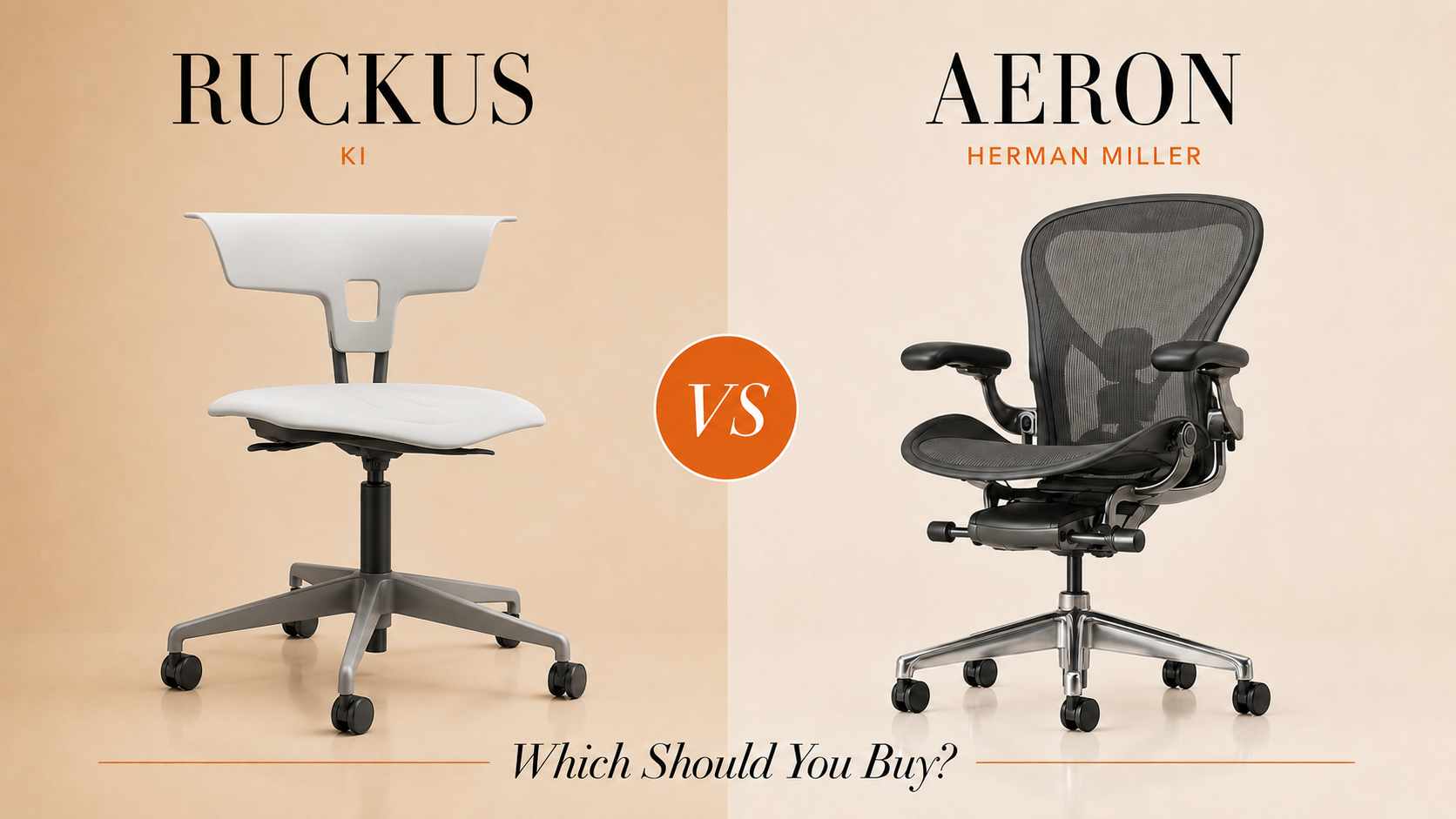
The KI Ruckus and Herman Miller Aeron represent fundamentally different philosophies. The Ruckus is a task chair built for classrooms, collaborative spaces, and active environments where flexibility matters more than granular adjustment. The Aeron is an icon of office ergonomics, engineered for all-day desk work with premium mesh, precise adjustability, and a 12-year warranty. If you're choosing between them, you're likely weighing context: dynamic learning or education spaces versus traditional focused desk work.
At a glance
| Official specs | KI Ruckus | Herman Miller Aeron |
|---|---|---|
| Seat height |
|
|
| Seat depth |
|
|
| Seat width |
| Not stated |
| Back height |
| Not stated |
| Arms |
|
|
| Warranty |
|
|
| Sizes | Not stated |
|
| Load capacity | Not stated |
|
| Recline | Not stated |
|
| Lumbar support | Not stated |
|
| Headrest | Not stated |
|
| Chair weight | Not stated |
|
KI Ruckus — strengths and weaknesses
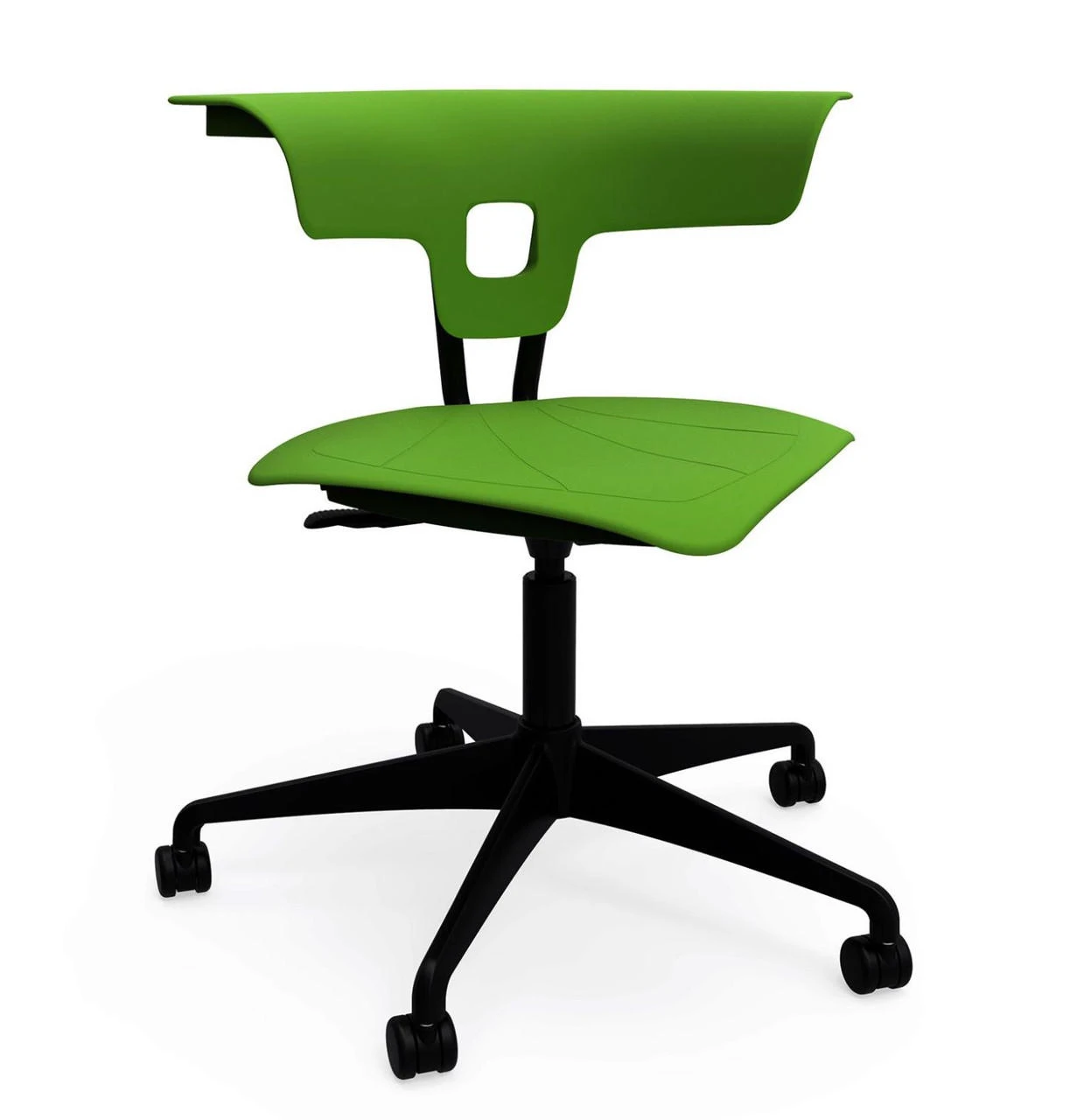
Strengths: The Ruckus shines in educational and collaborative environments. A Buffalo Grove High School study found it increased student engagement from 40% to 95%, with teachers and students praising its flexibility and ease of reconfiguration. The flexing back encourages movement, multiple seating positions support different learning styles, and built-in storage features add practical value. Teachers reported better mobility and the ability to engage more directly with students. It's lightweight, easy to rearrange, and purpose-built for active spaces.
Weaknesses: Review data is thin—only two reviews, both focused on educational settings. One user suggested adding slots on the back for backpack straps, a small usability tweak. There's no detail on lumbar support or weight capacity (KI lists integrated arms and a lifetime product warranty), so buyers seeking granular ergonomic specs will be left guessing. It's not positioned as a premium desk chair for focused, all-day computer work.
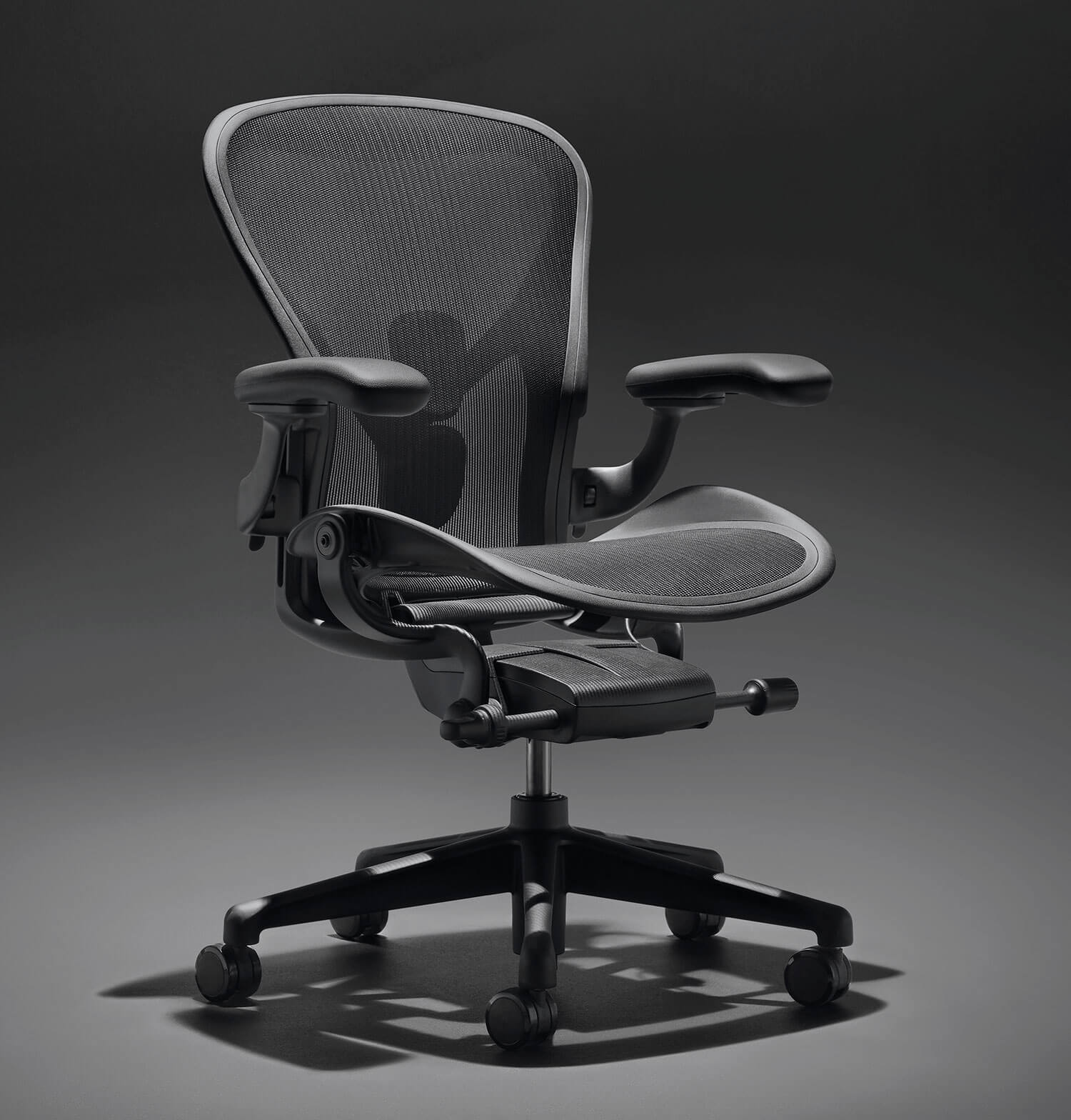
Herman Miller Aeron — strengths and weaknesses
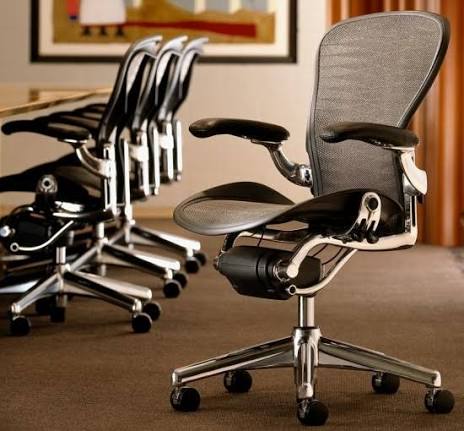
Strengths: The Aeron is a proven workhorse for desk-bound professionals. Its Pellicle mesh provides exceptional ventilation, and the PostureFit SL lumbar system and 8Z zones deliver targeted support. Current used listings we track on eBay US put the Herman Miller Aeron at about $499–$797 (asking prices, middle half of 127 listings from the last 30 days, updated Oct 29, 2026). The 12-year warranty, 4D armrests, and Harmonic 2 Tilt recline speak to serious ergonomic engineering. It comes in three sizes (A, B, C), rated for 300 / 350 / 400 lb respectively.
Weaknesses: At $1,775 – $2,840, the Aeron is a significant investment, and reviews acknowledge it's not universally loved. One long-term user struggled to fully embrace it as a daily driver over three years, and another mentioned the seat pan can dig uncomfortably. Sizing (A, B, or C) is critical and can be confusing, especially when buying used.
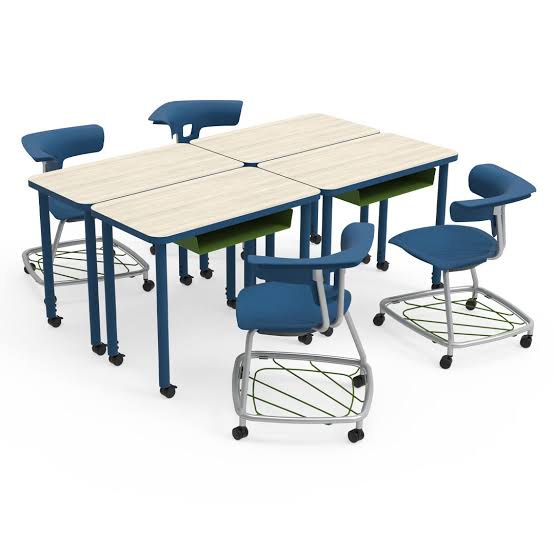
How they differ
The core trade-off is context versus precision. The Ruckus is designed for movement, collaboration, and reconfiguration—ideal for classrooms, coworking areas, or any space where chairs get shuffled frequently. It doesn't offer the adjustability or ergonomic depth of a premium task chair, but that's not its mission. The Aeron is the opposite: a stationary throne engineered for 8-plus-hour desk sessions, with mesh that breathes, lumbar that adapts, and adjustments that dial in fit. It's overkill for a classroom and underkill for a flexible learning environment.
Price is another consideration. The Aeron lists at $1,775 – $2,840, while we have no sourced price for the Ruckus. Aeron's resale value and 12-year warranty can soften the blow for long-term buyers. The Ruckus has virtually no second-hand market data, but its durability in hard-use educational settings suggests it can take a beating.
Who should buy which
Buy the KI Ruckus if: You're outfitting a classroom, makerspace, library, or collaborative office where chairs need to move constantly. You value flexibility and student or team engagement. You don't need advanced lumbar support or 4D armrests, and your users won't sit in one position for eight straight hours.
Buy the Herman Miller Aeron if: You're a remote worker, developer, designer, or anyone spending full days at a desk. You want proven ergonomic support, excellent ventilation, and the peace of mind that comes with a 12-year warranty. You're comfortable with the upfront cost (or hunting the used market) and you've confirmed your size (B is most common for medium builds).
The verdict
These chairs rarely compete in the same purchase decision, and that's the point. The KI Ruckus wins in dynamic, collaborative, or educational spaces where movement and flexibility drive outcomes—the Buffalo Grove study's engagement leap from 40% to 95% speaks volumes. The Herman Miller Aeron wins for focused, all-day desk work where ergonomic precision and long-term durability justify the investment. If you're a solo knowledge worker, the Aeron is the safe, well-documented choice. If you're furnishing a classroom or agile workspace, the Ruckus is purpose-built for that job. Pick the tool that matches the job.
Frequently asked
- Is the KI Ruckus or Herman Miller Aeron better for classroom use?
- The KI Ruckus is purpose-built for education and collaborative spaces, with studies showing it increased student engagement from 40% to 95%. The Aeron is designed for traditional desk work.
- Why is the Herman Miller Aeron priced as a premium chair?
- At $1,775 – $2,840, the Aeron offers premium features including 4D armrests, PostureFit SL lumbar support, a 12-year warranty, and a 300 / 350 / 400 lb load capacity (Size A / B / C). However, reviews note strong resale value offsets the high initial cost.
- Which chair is more adjustable?
- The Aeron provides precise ergonomic adjustments (4D arms, lumbar support, Harmonic 2 Tilt recline) for individual desk workers. The Ruckus prioritizes flexible movement and repositioning for dynamic, collaborative environments.
Affiliate links: we may earn a commission from qualifying purchases. Check current delivery, return and warranty terms on Amazon.
Swap in a similar chair
Compare KI Ruckus with
Compare Herman Miller Aeron with
More comparisons
- Herman Miller Aeron vs Sidiz T80 Headrest: None offered by Herman Miller on Herman Miller Aeron; Headrest height / angle adjustment on Sidiz T80.
- Herman Miller Aeron vs Kokuyo Ing Headrest: None offered by Herman Miller on Herman Miller Aeron; With-headrest type on Kokuyo Ing.
- Herman Miller Aeron vs Wilkhahn AT Load capacity: 300 / 350 / 400 lb on Herman Miller Aeron; 45–140 kg on Wilkhahn AT.
- Herman Miller Aeron vs Okamura Sylphy Arms: Arm height 7.5–11.5 in on Herman Miller Aeron; Adjustable arms: 100 mm height on Okamura Sylphy.