Wilkhahn AT vs Herman Miller Aeron: Which Should You Buy?
Two premium task chairs with very different engineering philosophies
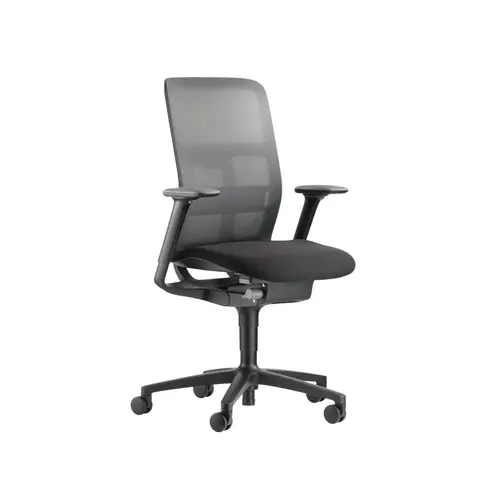
Differences at a glance
Sources
- Wilkhahn AT / AT Mesh digital brochure (EN) ↗Checked Sep 29, 2026
- Aeron Chair – Specs (hermanmiller.com) ↗Checked Sep 26, 2026
- Aeron Chairs product sheet (PDF, © 2026 MillerKnoll) ↗Checked Sep 26, 2026
- Aeron Chair – Herman Miller Store (US) ↗Checked Sep 26, 2026
- Wilkhahn Guarantee Policy (publication date January 1, 2024) ↗Checked Sep 29, 2026
- Wilkhahn Online Shop (Germany) (price) ↗Checked Sep 29, 2026
- Price
- From €831$1,775 – $2,840
- Seat height
- 40–53 cm (15.7–20.9 in); 42–53 cm (16.5–20.9 in); 43–61 cm (16.9–24.0 in); 65–77 cm (25.6–30.3 in)14.4–19.3 in (36.6–49 cm); 14.8–22.8 in (37.6–57.9 cm); 15.8–22.8 in (40.1–57.9 cm)
- Seat depth
- 43 cm (16.9 in); 39–45 cm (15.4–17.7 in)16 / 17 / 18.5 in (40.6 / 43.2 / 47.0 cm)
- Load capacity
- 45–140 kg (99–309 lb)300 / 350 / 400 lb (136 / 158.8 / 181.4 kg)
- Recline
- Seat tilt 12°, backrest up to 26°; optional 3D forward tilt up to 5°; sideways tilt up to 12°Harmonic 2 Tilt; options: Standard/Basic tilt, Tilt Limiter, Tilt Limiter with Seat Angle
- Arms
- Optional armrests: 1D height-adjustable by 100 mm in ten positions; 3D adds 50 mm depth and 25 mm width; 4D also pivots 25°Arm height 7.5–11.5 in (adjustable arms); 8.5 in (fixed arms); Options: Fully Adjustable Arms, Height-Adjustable Arms with Pivot, Height-Adjustable Arms, No Arms, Stationary Arms; Arm Height 7.5–11.5 in (Fully Adjustable Arms, specs page)
- Headrest
- Optional upholstered headrest, height-adjustable by 6 cm in 6 positions, depth adjustable up to 5 cm; adds 15 to 25 cm to total heightNone offered by Herman Miller
- Lumbar support
- Height-adjustable lumbar support, ten lockable positions, up to 60 mm; Optional lumbar support, height-adjustable by 6 cm in six positions, optional depth adjustment up to 1.5 cmOptions: No additional support, PostureFit, Adjustable Lumbar Support, Adjustable PostureFit SL
- Warranty
- 5 years (star bases, seat and backrest frames and shells, mechanisms); 2 years (gas lifts, casters, glides, armrest function, fabrics, upholstery)12-year, 3-shift warranty, with limited exceptions
Questions
Which has a headrest?
Only the Wilkhahn AT (as an option); the Herman Miller Aeron does not offer one.
What do owners mention most?
Back support for the Wilkhahn AT, and price and value for the Herman Miller Aeron, based on review summaries.
As an Amazon Associate I earn from qualifying purchases. Search links may include other models or accessories; confirm the exact item, seller and condition before buying.
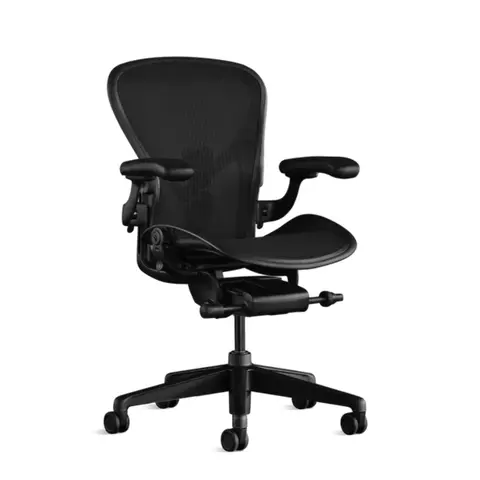
Choose the size and generation before comparing offers.
Choose Aeron size A, B or CRead the full comparison
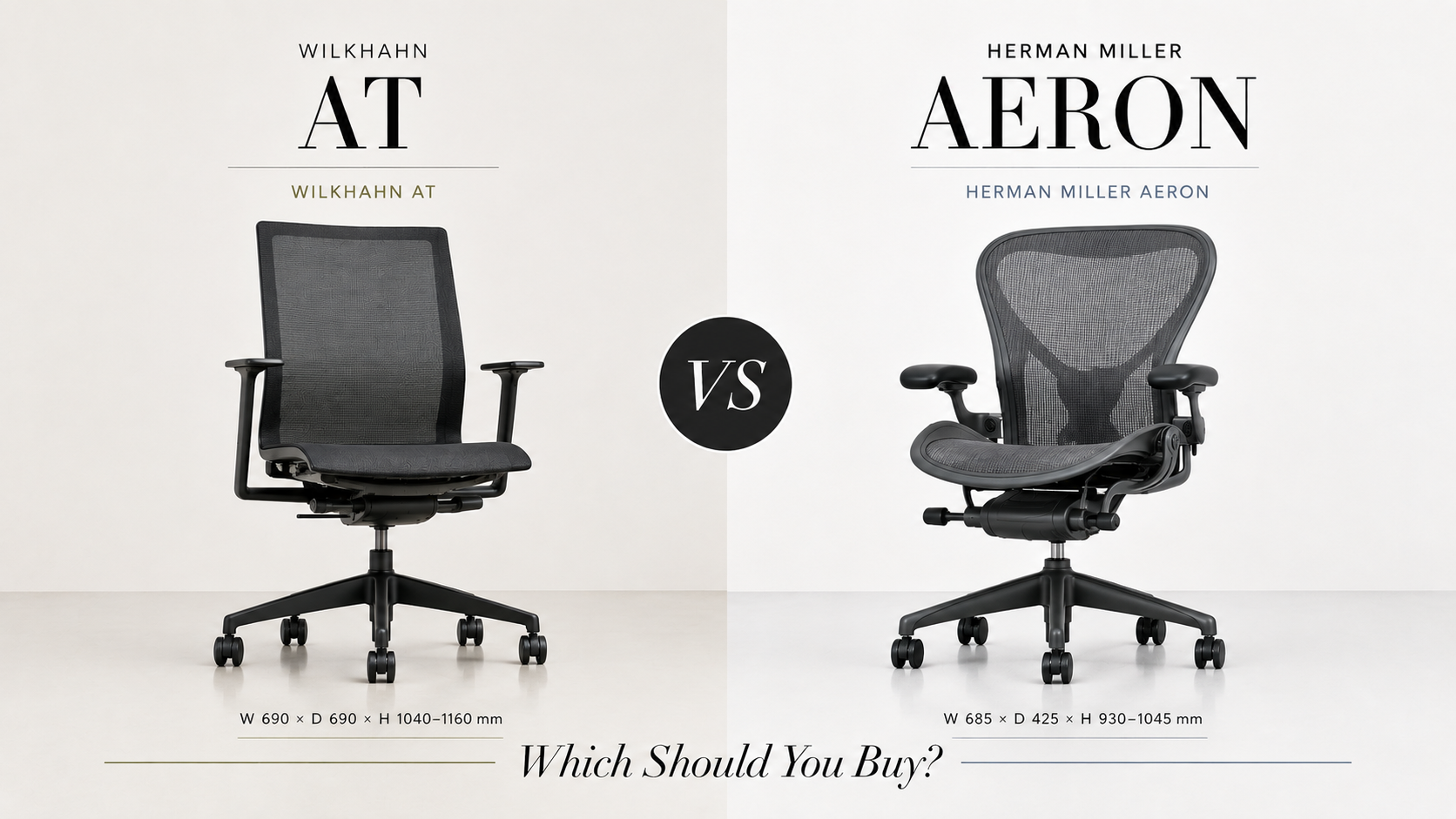
Introduction
The Wilkhahn AT and Herman Miller Aeron represent two premium approaches to the same ergonomic problem: all-day task seating for medium-build users. On paper, both offer adjustable arms and lumbar support, but their warranties differ (5 years on the AT's frame and mechanism versus 12 years on the Aeron). The Aeron lists at $1,775 – $2,840; we have no sourced price for the AT. The real gap is engineering philosophy: automatic adaptation versus manual fine-tuning, and whether the Aeron's iconic Pellicle mesh and resale value justify its price.
At a glance
| Official specs | Wilkhahn AT | Herman Miller Aeron |
|---|---|---|
| Sizes |
|
|
| Seat height |
|
|
| Seat depth |
|
|
| Load capacity |
|
|
| Recline |
|
|
| Arms |
|
|
| Lumbar support |
|
|
| Headrest |
|
|
| Warranty |
|
|
| Chair weight |
|
|
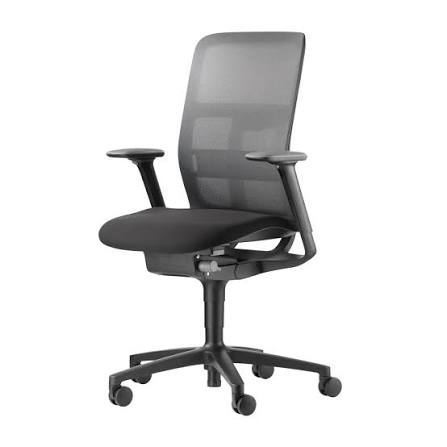
Wilkhahn AT—strengths & weaknesses
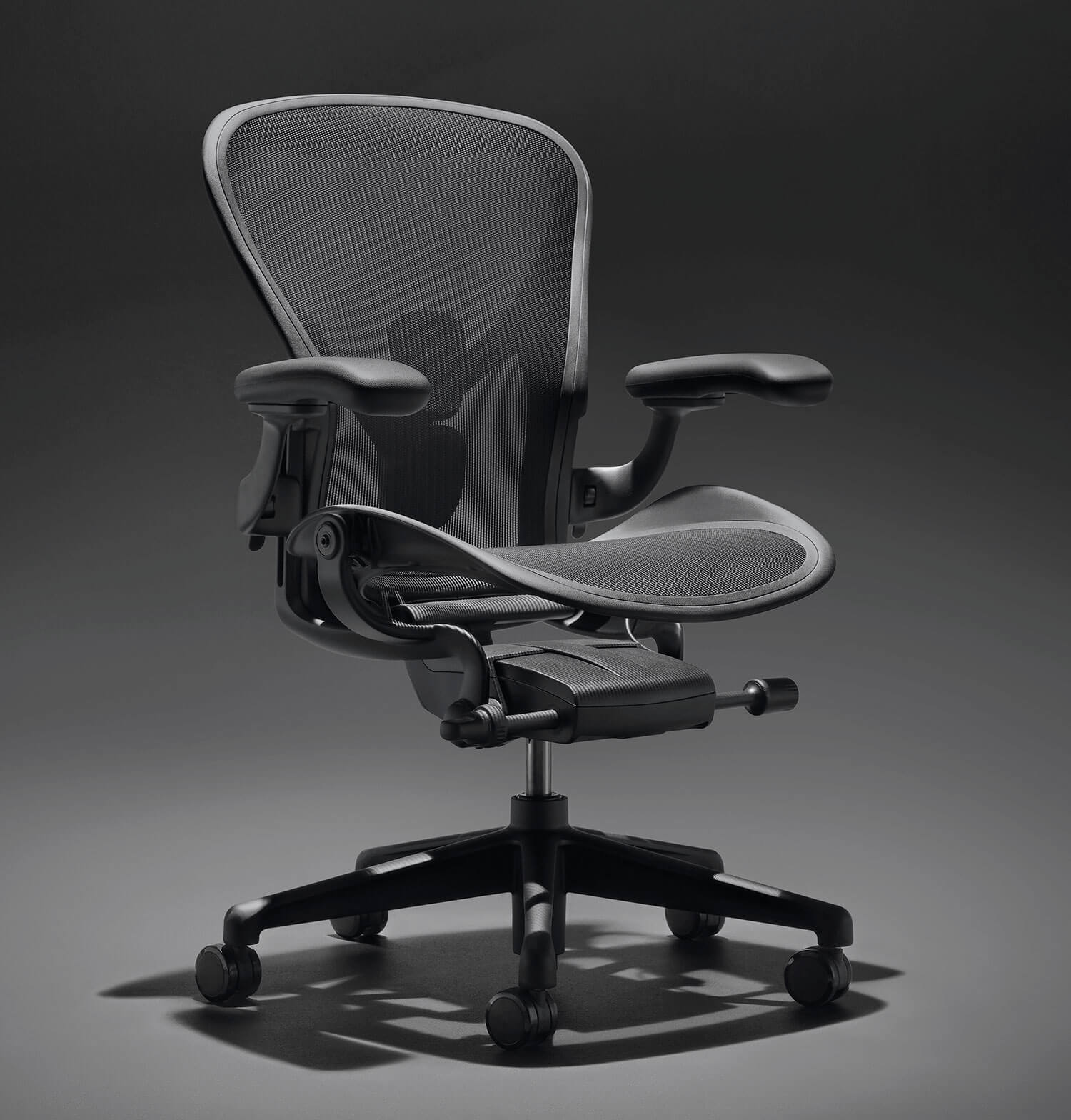
Strengths: The AT's signature feature is its automatic weight adjustment and self-centering suspension, which maintains your center of gravity in any posture without manual fiddling. Reviewers highlight its simplicity: adjust seat height once, and the Free-2-move mechanism adapts to your body automatically. The technology is well-explained, and the chair promotes a healthy range of motion with clean aluminum details. Customizable models expand configuration options.
Weaknesses: With only one review in the dataset, long-term durability feedback is limited. The single noted flaw was a minor typo in promotional video material—hardly a functional concern, but it reflects the thin review pool.
Herman Miller Aeron—strengths & weaknesses
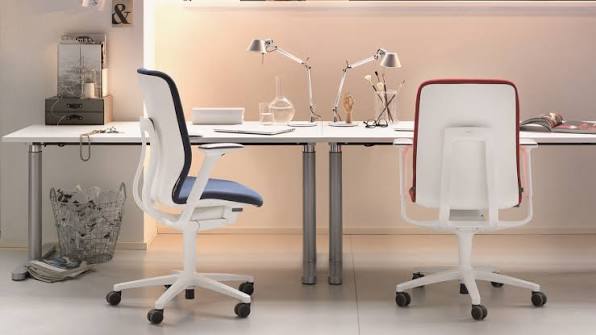
Strengths: The Aeron's Pellicle mesh and 8Z zoning deliver exceptional ventilation, and one reviewer likened the experience to "sitting on a cloud." Current used listings we track on eBay US put the Herman Miller Aeron at about $500–$797 (asking prices, middle half of 124 listings from the last 30 days, updated Oct 28, 2026). Official parts documentation and availability support long-term ownership. Comments indicate it works well for users with back, hip, and knee issues.
Weaknesses: Twelve reviews reveal a divided user base. One long-term reviewer struggled to fully embrace it as a daily driver after three years, noting the seat pan can dig uncomfortably. The Aeron is "not suitable for everyone," and its price is a common complaint. Some review content was promotional or technical (replacement guides), not genuine user feedback, which dilutes the ratings pool.
How they differ
Price and value proposition: The Aeron lists at $1,775 – $2,840; we have no sourced price for the Wilkhahn AT. The Aeron offsets its price through documented resale value, but only if you're willing to buy and sell on the secondary market.
Adjustment philosophy: The Wilkhahn automates tension and weight response; the Aeron requires manual configuration of PostureFit SL and tension settings. If you want set-and-forget simplicity, the AT wins. If you prefer granular control, the Aeron obliges.
Height accommodation: Neither brand publishes a user-height range. The Wilkhahn's standard seat height is 15.7–20.9 in, with an ESP model at 16.9–24.0 in; the Aeron's seat height depends on size, up to 22.8 in on sizes B and C. Taller users should compare seat heights or step up to an Aeron size C.
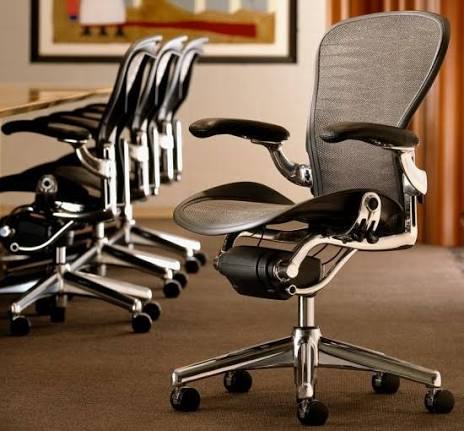
Mesh vs. suspension: The Aeron's iconic 8Z Pellicle mesh prioritizes breathability; the Wilkhahn's self-centering suspension prioritizes dynamic motion. Both deliver lumbar support, but through different mechanisms.
Track record: The Aeron has 12 reviews (albeit mixed) and decades of market presence; the AT has one positive review and less brand recognition outside Europe.
Who should buy which
Buy the Wilkhahn AT if: You value simplicity and want automatic adaptation without tweaking settings. You appreciate clean, understated design. You're willing to take a small risk on a less-reviewed model whose warranty (5 years on frames and mechanisms, 2 years on wear parts) is shorter than the Aeron's 12 years.
Buy the Herman Miller Aeron if: You prize exceptional ventilation and work in warm environments. You plan to buy used and resell later, leveraging its strong secondary market. You prefer manual control over lumbar and tension settings. You fit one of its three sizes and the seat pan doesn't bother you during extended trials. You want the reassurance of a chair with a 25-year track record and extensive parts availability.
The verdict
The Wilkhahn AT and Herman Miller Aeron differ on specs, warranty and philosophy. The AT suits buyers who want premium ergonomics with automatic adaptation instead of manual tuning. The Aeron justifies its price only if you exploit its resale value, require best-in-class ventilation, or already know from a showroom trial that its seat pan agrees with your body.
Frequently asked
- Is the Wilkhahn AT easier to adjust than the Herman Miller Aeron?
- Yes. The Wilkhahn AT features automatic weight adjustment—you only need to set seat height and it adapts to your movements. The Aeron requires manual configuration of its PostureFit SL lumbar system.
- Does the Herman Miller Aeron hold resale value better?
- Review data confirms the Aeron has excellent resale value, with buyers reporting they can sell used models for the same price after 5 years. No resale data is provided for the Wilkhahn AT.
- Which chair is better for taller users?
- Neither brand publishes a user-height range. The Wilkhahn AT's standard seat height is 15.7–20.9 in (an ESP model reaches 16.9–24.0 in), while the Aeron comes in sizes A, B and C with seat height up to 22.8 in on sizes B and C.
Affiliate links: we may earn a commission from qualifying purchases. Check current delivery, return and warranty terms on Amazon.
Swap in a similar chair
Compare Wilkhahn AT with
Compare Herman Miller Aeron with
More comparisons
- Herman Miller Aeron vs Sidiz T80 Headrest: None offered by Herman Miller on Herman Miller Aeron; Headrest height / angle adjustment on Sidiz T80.
- Herman Miller Aeron vs Kokuyo Ing Headrest: None offered by Herman Miller on Herman Miller Aeron; With-headrest type on Kokuyo Ing.
- Herman Miller Aeron vs Okamura Sylphy Arms: Arm height 7.5–11.5 in on Herman Miller Aeron; Adjustable arms: 100 mm height on Okamura Sylphy.