1 / 20
Steelcase · Office Chairs
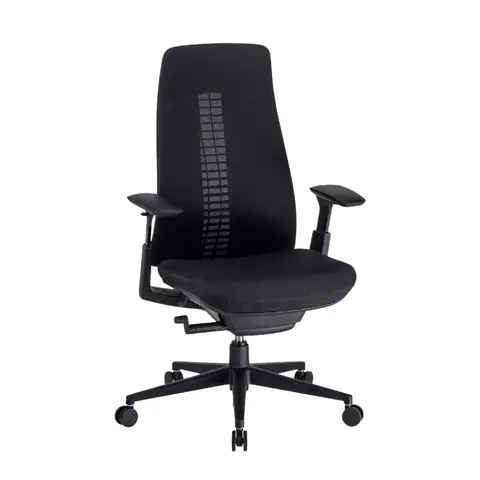
Steelcase Karman
Steelcase · Launched 2023
Design-forward offices and mobile workers.
$1,199 – $1,543
About this price
varies by configuration · as of Sep 25, 2026
Source: US Steelcase Store ↗, checked Sep 25, 2026
- No headrest
- Up to 350 lb
- Warranty: Limited lifetime
Summary
A very light Steelcase mesh chair that adjusts itself to your weight as you move.
Best for
- People who want few controls; a weight-activated mechanism handles the recline.
- Those who dislike hard seat edges; the frame flexes at the edges.
- Moving the chair often; Steelcase lists it at 29 lb.
- Users up to 350 lb, the store's stated weight limit.
Good to check first
- Extra lumbar support is an add-on, so select it if you want more lower-back support.
- Recline resistance is set with a four-position comfort dial rather than a continuous knob.
The trade-off
Light and self-adjusting, but with fewer manual settings than Steelcase's Leap.
Value check
Lists from $1,199 at the Steelcase Store.
- Price
- $1,199 – $1,543
- Load capacity
- 350 lb
- Warranty
- Limited lifetime
What Steelcase highlights
Sources
- Steelcase, Steelcase Karman ↗Checked Oct 11, 2026
Hybrid seat
The seat combines a suspension textile with built-in cushioning. Steelcase says it stays comfortable for as long as you sit.
Weight-activated mechanism
The mechanism reacts to your body weight as you sit and shift. Steelcase says it adjusts automatically in every direction.
Comfort Edge
The light frame bends instead of forming hard edges. Steelcase says this removes pressure points on the legs and body.
LiveBack technology
The backrest responds as you move. Steelcase says it balances body weight and supports the back and spine.
Comfort dial and 4D arms
A dial sets one of four recline resistance levels. The optional 4D arms move up and down, pivot and shift in all directions.
As described by Steelcase on its official pages; not a Chairpedia assessment.
What users say
Most-mentioned topics
- 1. Comfort17 mentions · 88% positive
- 2. Breathability12 mentions · 92% positive
- 3. Seat12 mentions · 42% positive
- 4. Design11 mentions · 91% positive
- 5. Build quality8 mentions · 75% positive
- 6. Adjustability7 mentions · 57% positive
- 7. Armrests6 mentions · 50% positive
More details →Close
Who it suits, who it doesn't
- Suits Standard-height users seeking breathability: One around six feet tall and average weight found the mesh comfortable for several hours of ergonomic work without bottoming out.
- Suits Those who shift positions: One owner noted the chair accommodates cross-legged sitting and other postures thanks to the flexible mesh and designed movement in the base.
- Less suited to Users who prefer deeper recline control: One found the tilt modes inadequate for productivity or gaming, with no tension knob and mode one tilting too far forward.
- Less suited to Those needing lower armrests: One user around six feet tall reported the armrests do not lower enough and feel too stiff.
Where users disagree
Seat firmness and comfort
One side: Some find the seat springy, supportive, and accommodating for various postures including cross-legged sitting.
Other side: Others describe it as surprisingly firm and hard with little give, uncomfortable for all-day use or non-standard positions.
Overall value and feature completeness
One side: Several call it the best mesh chair on the market, with innovative design and superior support worth the premium.
Other side: Others see it as mid-tier with very limited adjustability, missing key features like seat depth and tension control found on competing models.
Base movement and stability
One side: One owner praises the designed play in the base as a feature that encourages movement and reduces fatigue.
Other side: Another initially perceives the same play as instability or a defect, though context suggests they may have adapted.
Users who switched
- From first-generation Aeron → To Karman: Found the Karman more comfortable with better armrests and no bottoming out after several hours.
- From Series 1 → To Karman: Described the Karman as in an entirely different class, a major upgrade in quality and comfort.
- From Gesture → To Karman: One owner viewed the Karman as a comparable alternative to the top-tier Gesture configuration after several months of use. Comparison
- From Karman → To Aeron: Preferred the Aeron's adjustable tilt limiter for better control of seated angles despite appreciating the Karman's sleek appearance.
Detailed topics
- Recline function tilts too far back without adequate tension adjustment · about one in eight discussions
What users did: One owner resorted to using only the upright locked mode; no other fix reported. - Backrest appears bent or twisted with uneven gaps and asymmetric lean · one discussion with a replacement unit showing identical bending
What users did: Replacement did not resolve the issue; unclear if design or defect. - The front edge of the seat has a pronounced design that some users may notice when moving the chair or getting up · one discussion at six months
What users did: No fix reported. - Build quality concerns including burrs in hidden areas and surfaces showing white marks · one discussion at six months
What users did: No fix reported; burrs noted as difficult to clean.
Topic notes
- Comfort: Most owners praise the mesh for eliminating pressure points and supporting various sitting positions, though a few find the seat too firm or hard-edged for non-standard postures or all-day use.
- Breathability: The mesh construction is consistently highlighted as highly breathable, with several noting it feels like fabric to the touch and keeps them cool during extended sessions.
- Seat: Opinion splits between those who appreciate the springy, cushioned feel of the seat mesh and those who find it surprisingly firm with little give, particularly at the front edge.
- Design: The sleek, lightweight, frameless aesthetic draws widespread praise for looking elegant and modern, with several calling it as visually appealing as top-tier competitors.
- Build quality: Build quality receives mixed feedback: some report a premium feel and solid construction, while others encountered burrs in hidden areas, surface marks, or apparent twisting of the backrest frame.
- Adjustability: About half of discussions criticize the lack of seat depth adjustment and inadequate tilt tension control, with some missing features found on other premium chairs.
- Armrests: Armrests are described as stable and better than some competing models by a few owners, but others find them too firm, unable to lower enough, or of poor quality.
After long-term use
After a year or more
One six-month owner remained very happy with the backrest but noted build quality issues including surface marks and sharp edges became more apparent over time.
Only users describing six months or more of use.
Before you buy
Fit (official)
- Seat height about 15.8–20.4 in (15.8125"–20.4375" in store specs).
- Rated to 350 lb.
Delivery and setup
- Chair weight 29 lb.
- Steelcase Store warranty: limited 12 years on parts and labor.
Returns (official policy)
- Steelcase Store lists returns on this chair as free.
- Other sellers set their own return terms.
Sources: Steelcase Store, Steelcase Karman ↗ (checked Oct 11, 2026) · Steelcase, Steelcase Karman ↗ (checked Oct 11, 2026)
Versions and options
- Headrest option
- Arm options
- Lumbar option
Specs
Sources
- Steelcase Karman Mesh Ergonomic Office & Desk Chair (steelcase.com) ↗Checked Sep 26, 2026
- Steelcase Karman – Steelcase Store (US) ↗Checked Sep 26, 2026
Size and fit
- Sizes
- Standard back chair, standard back stool, or high back chair with neck support pillow
- Seat height
- 15.625–20 in (39.7–50.8 cm)
- Seat depth
- Fixed seat depth (no number given)
- Load capacity
- 350 lb (158.8 kg)
Adjustments
- Recline
- Comfort dial supports four recline positions
- Arms
- 4D arms or armless4D ARM: raise up and down, pivot in and out, shift in all directions
- Lumbar support
- Optional lumbar support
- Headrest
- No headrest option; High Back version has an adjustable neck support pillow
Build and warranty
- Warranty
- Steelcase Limited Lifetime Warranty
- Chair weight
- 29 lb
About Steelcase
Sources
- Steelcase, History ↗Checked Oct 11, 2026
- Founded
- 1912, as the Metal Office Furniture Company
- Based in
- Grand Rapids, Michigan, USA
The company started in Grand Rapids in 1912 making metal office furniture. It took the Steelcase name on December 1, 1954.
Compare
- Steelcase Karman vs Herman Miller Aeron Headrest: No headrest option on Steelcase Karman; None offered by Herman Miller on Herman Miller Aeron.
- Steelcase Karman vs Steelcase Gesture Headrest: No headrest option on Steelcase Karman; Optional on Steelcase Gesture.
- Steelcase Karman vs Steelcase Leap V2 Headrest: No headrest option on Steelcase Karman; Optional on Steelcase Leap V2.
Questions
How much does the Steelcase Karman cost?
It costs $1,199 – $1,543 at the US Steelcase Store, depending on configuration, checked Sep 2026.
What is the Steelcase Karman's weight capacity?
It is rated for 350 lb, according to Steelcase's official specifications.
Does the Steelcase Karman have a headrest?
No. Steelcase does not offer a headrest for the Karman. The High Back version has an adjustable neck support pillow.
What sizes or versions of the Steelcase Karman are there?
It comes in standard back chair, standard back stool, or high back chair with neck support pillow.
Where can I buy the Steelcase Karman?
You can buy it from Amazon or the US Steelcase Store. Check the configuration, price and return terms before ordering.
Videos
 The KING of MESH CHAIRS - Steelcase Karman ReviewAhnestly · 54.0K views
 Steelcase Karman Review: 6 Months LaterBTODtv · 38.4K views
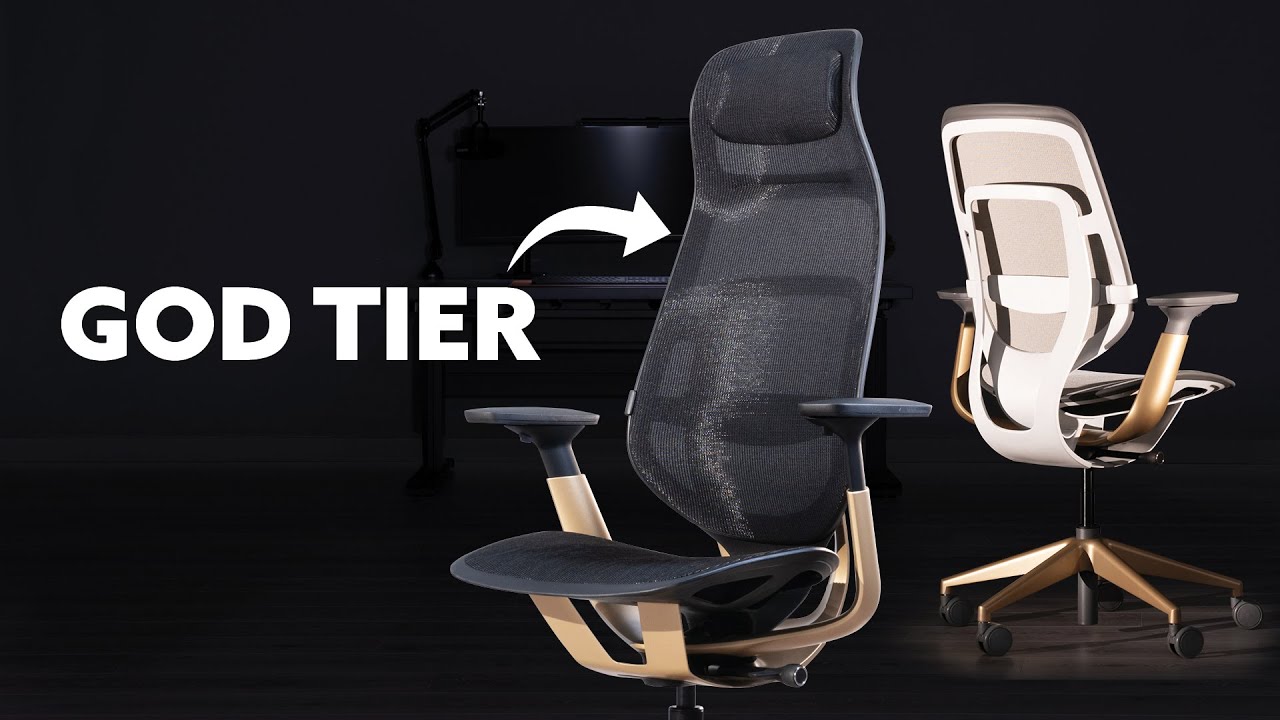 Is Steelcase Karman GOD TIER with New Built-in Headrest?BTODtv · 30.5K views
 This is the Best Mesh Chair | Steelcase Karman High BackAhnestly · 30.4K views
Similar features for less
Chairs whose official specifications share features with the Steelcase Karman, at a lower list price.
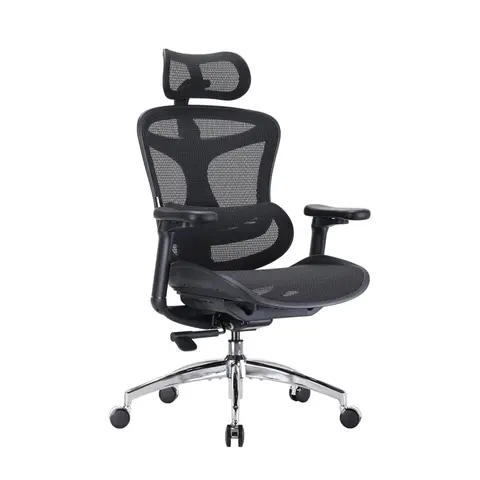 SIHOOSIHOO Doro C300$559.99 – $569.99
- Adjustable lumbar support
- 4D armrests
Warranty: 3 years (vs 12)
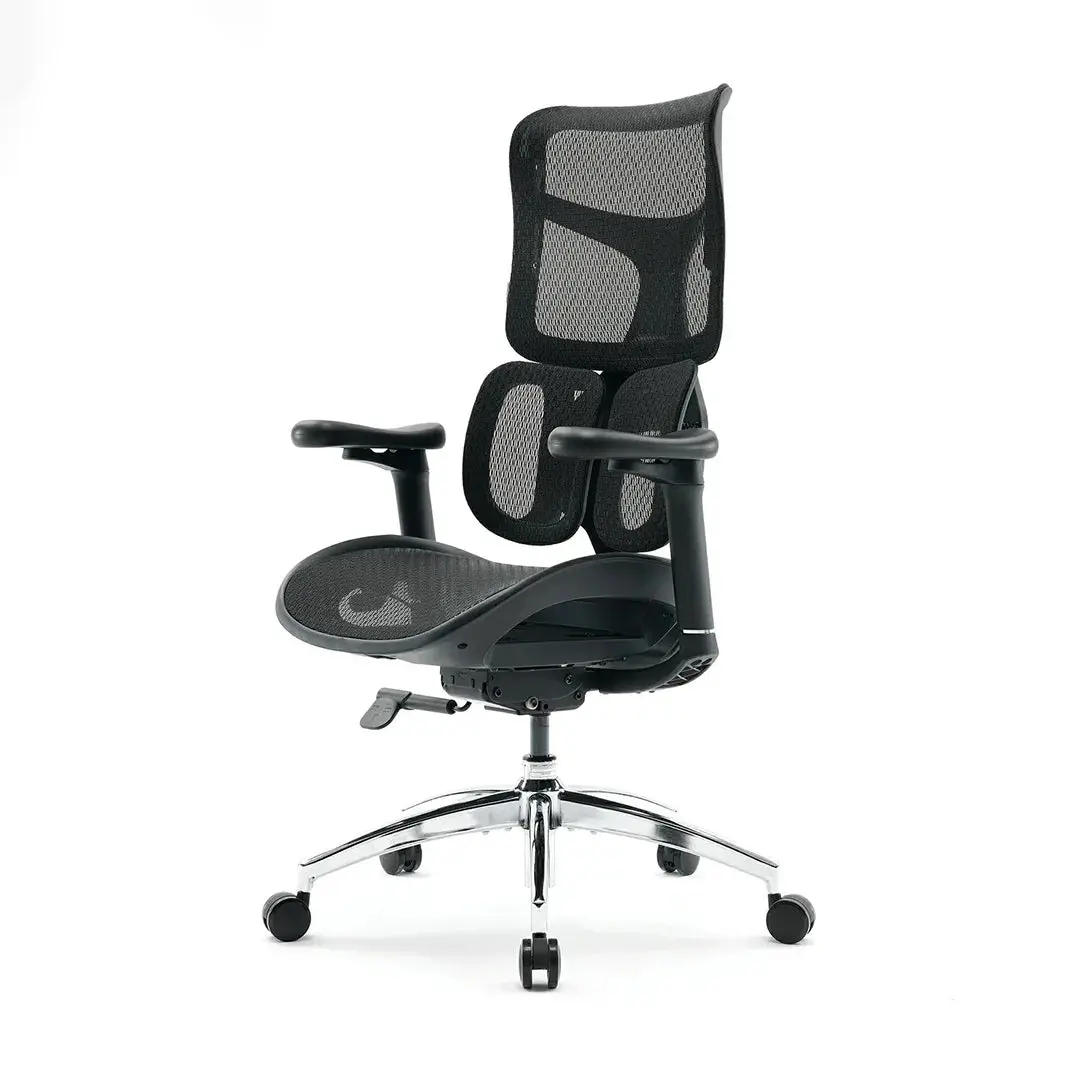 SIHOOSIHOO Doro S100$499.99 – $509.99
- Adjustable lumbar support
- 4D armrests
Warranty: 3 years (vs 12)
Features are compared from each brand's published specifications; check the details that matter to you. Some links are affiliate links.
Where to buy
Amazon
Check current price
- Check price at Steelcase ↗
US Steelcase Store
$1,199 – $1,543
Amazon returns are typically 30 days of delivery but set per listing — check before ordering. Some links are affiliate links; Chairpedia may earn a commission at no extra cost to you (disclosure).
Keep exploring
Similar chairs

Specs and prices come from the brand sources listed under Specs and next to the price; User Insights link to their originals. Confirm the exact configuration, seller and price before buying. Editorial policy
From $1,199
Where to buy