Humanscale Liberty vs Steelcase Gesture: Which Should You Buy?
Two premium chairs, wildly different philosophies
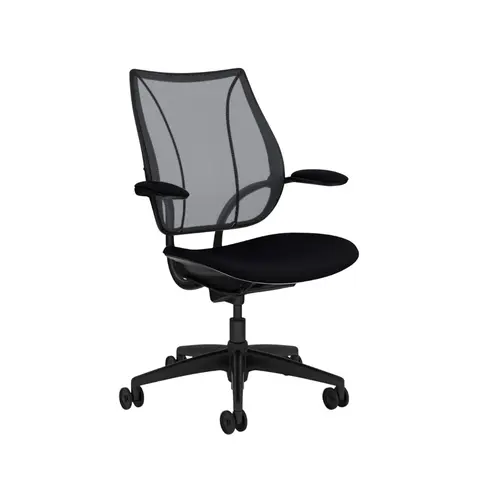
24 lb
lighter: Humanscale Liberty weighs less than Steelcase Gesture (official specs)
Differences at a glance
Sources
- Liberty Task Chair with Mesh Backrest – Humanscale Shop (US) ↗Checked Sep 26, 2026
- Steelcase Seating Specification Guide, April 2021 (PDF) ↗Checked Sep 26, 2026
- Gesture Ergonomic Office & Desk Chair (steelcase.com) ↗Checked Sep 26, 2026
- Liberty brochure (PDF, Humanscale, undated) ↗Checked Sep 26, 2026
- Liberty Task Chair configurator (humanscale.com, US region) ↗Checked Sep 26, 2026
- US Steelcase Store (price) ↗Checked Sep 25, 2026
- Price
- $1,613 – $2,326$1,599 – $2,560
- Seat height
- 16.6–20.9 in (42.2–53.1 cm)16–21 in
- Seat depth
- 16.5–18.75 in (41.9–47.6 cm)15.75–18.5 in (functional, 2.75 in adjustment); seat depth 18.25 in
- Load capacity
- 400 lb (181.4 kg)400 lb (181.4 kg)
- Recline
- Self-Adjusting Recline: no tension springs, no recline locksSeat-to-back angle 98°–125°
- Arms
- Options: Fixed Duron Arms, Adjustable Duron Arms, Advanced Duron Arms, Armless, Fixed Duron Gel ArmsWidth 10.25–22.5 in between arms; height 7.25–11.5 in; pivot 15° in/out; depth 2.125 in
- Lumbar support
- Self-adjusting lumbar support; no external lumbar devicesCore Equalizer, with optional additional (height-adjustable) lumbar
- Warranty
- 15 Years; Fabric/Cushions/Arm Pads/Casters: 5 YearsSteelcase Limited Lifetime warranty – 12 years, multi-shift, 24/7 parts and labor
What users mention
From 7 Humanscale Liberty and 117 Steelcase Gesture user reviews, most mentioned first. Green is liked, orange is a caution.
Comfort
Humanscale Liberty9 mentionsSteelcase Gesture87 mentionsArmrests
Humanscale Liberty1 mentionSteelcase Gesture51 mentionsAdjustability
Humanscale Liberty4 mentionsSteelcase Gesture47 mentionsSeat
Humanscale Liberty6 mentionsSteelcase Gesture43 mentionsPrice and value
Humanscale Liberty4 mentionsSteelcase Gesture44 mentionsBuild quality
Humanscale Liberty3 mentionsSteelcase Gesture40 mentions
Questions
Which is cheaper, the Humanscale Liberty or the Steelcase Gesture?
The Steelcase Gesture is cheaper to start: $1,599 versus $1,613 for the Humanscale Liberty at the brand stores (Sep 2026).
Which has a higher weight capacity?
Neither. Both are rated for 400 lb in their official specifications.
What do owners mention most?
Comfort for the Humanscale Liberty, and comfort for the Steelcase Gesture, based on review summaries.
As an Amazon Associate I earn from qualifying purchases. Search links may include other models or accessories; confirm the exact item, seller and condition before buying.
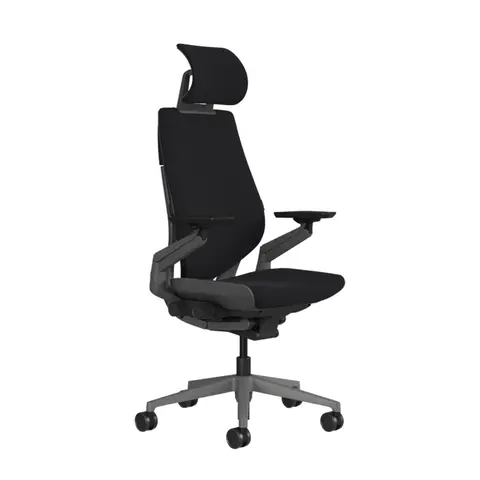
Check the arm setup and desk clearance before choosing.
Read the Gesture fit and adjustment guideRead the full comparison
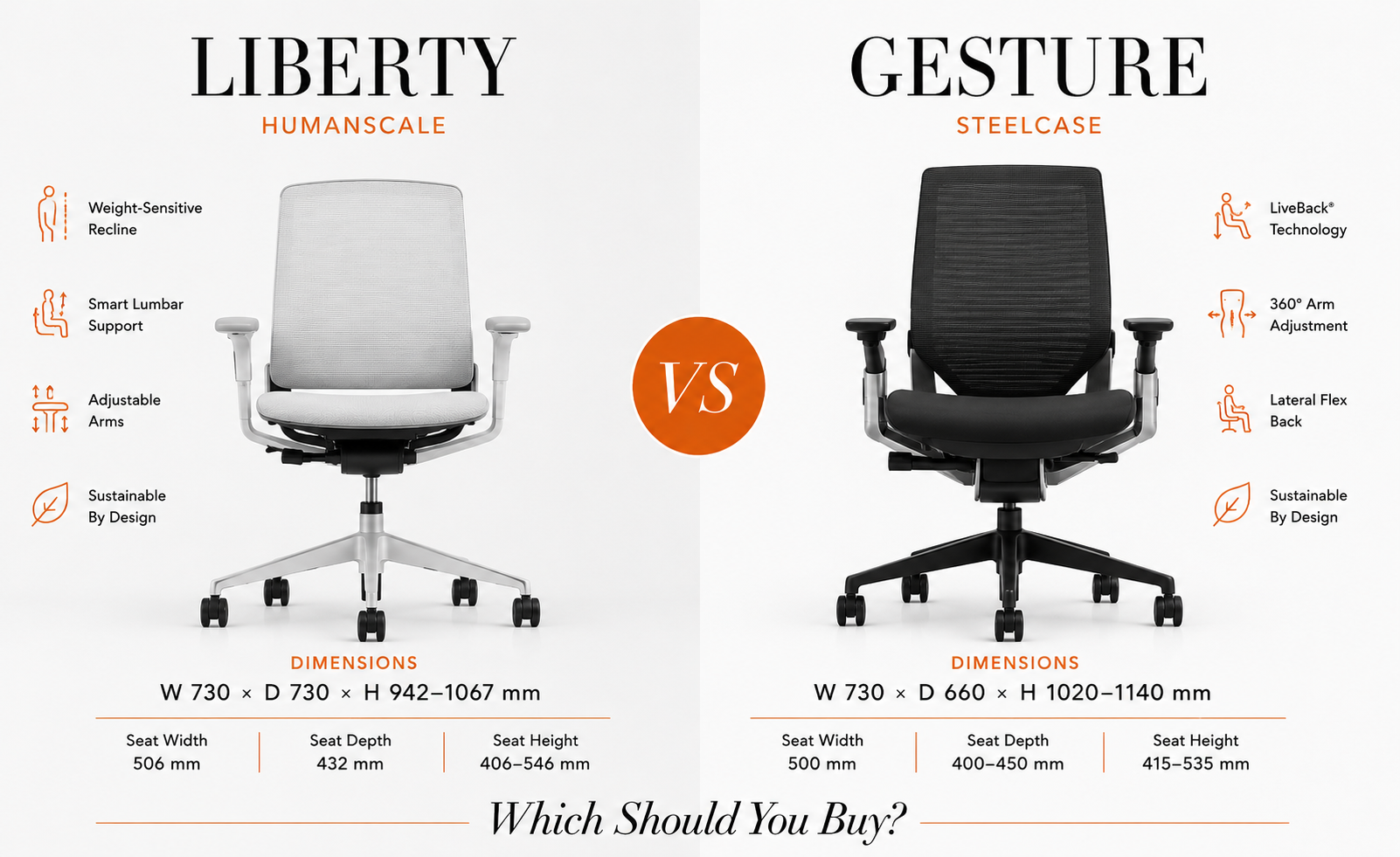
Introduction
The Humanscale Liberty and Steelcase Gesture represent two conflicting design philosophies at premium price points. Both are premium office chairs with long warranties (15 years for the Liberty, 12 years for the Gesture), but they diverge sharply in execution. The Liberty banks on automatic, intuitive adjustments that respond to body weight, while the Gesture offers comprehensive manual controls for multi-posture work. With the Gesture listed at $1,599–$2,560 (without headrest) on Steelcase's US store and the Liberty at $1,613–$2,326 on Humanscale's US shop (Sep 2026), the choice buys you either simplicity or granular control, depending on how you look at it.
At a glance
| Official specs | Humanscale Liberty | Steelcase Gesture |
|---|---|---|
| Seat height |
|
|
| Seat depth |
|
|
| Back height |
|
|
| Load capacity |
|
|
| Recline |
|
|
| Arms |
|
|
| Lumbar support |
|
|
| Warranty |
|
|
| Chair weight |
|
|
| Seat width | Not stated |
|
| Headrest | Not stated |
|
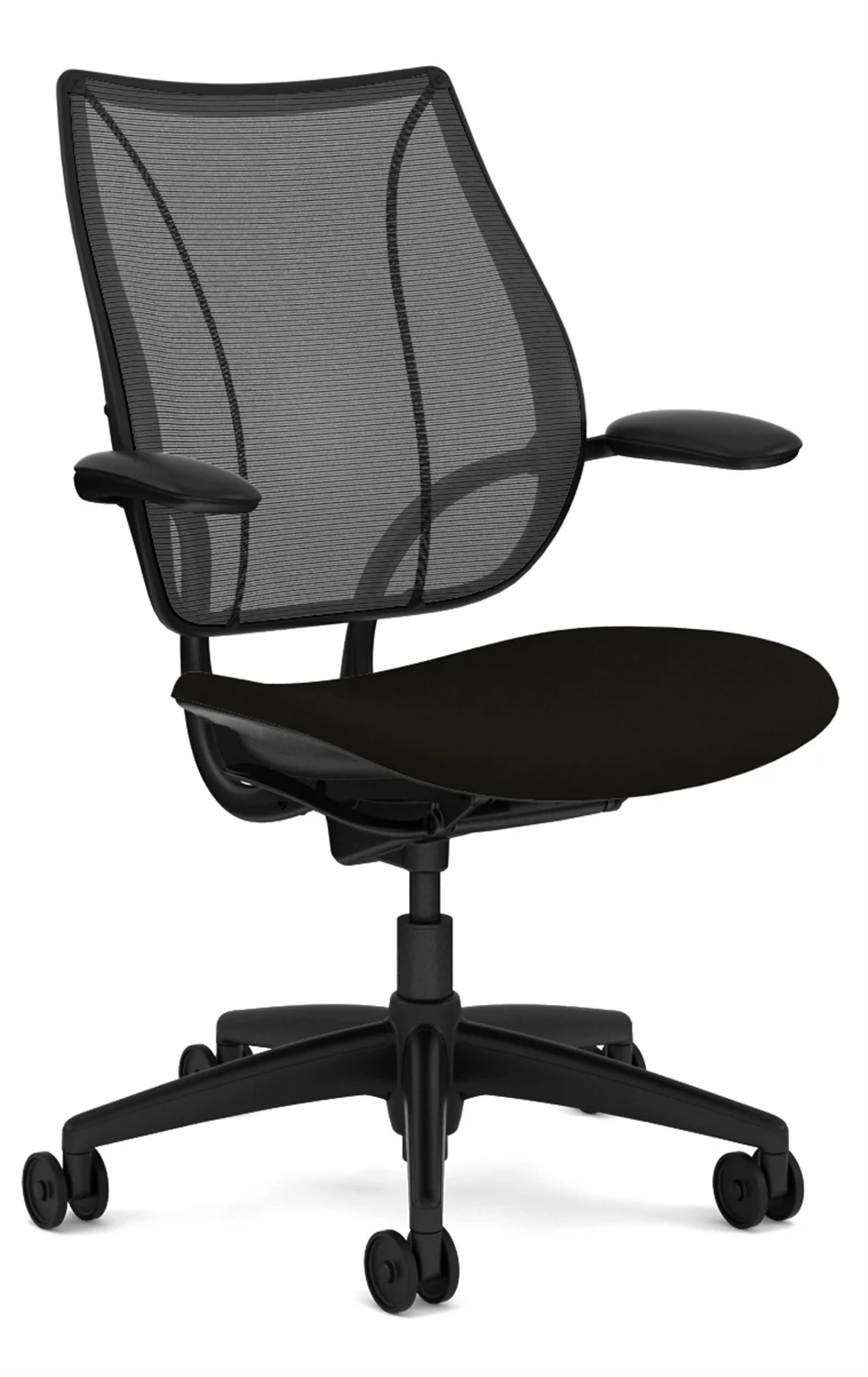
Humanscale Liberty — strengths & weaknesses
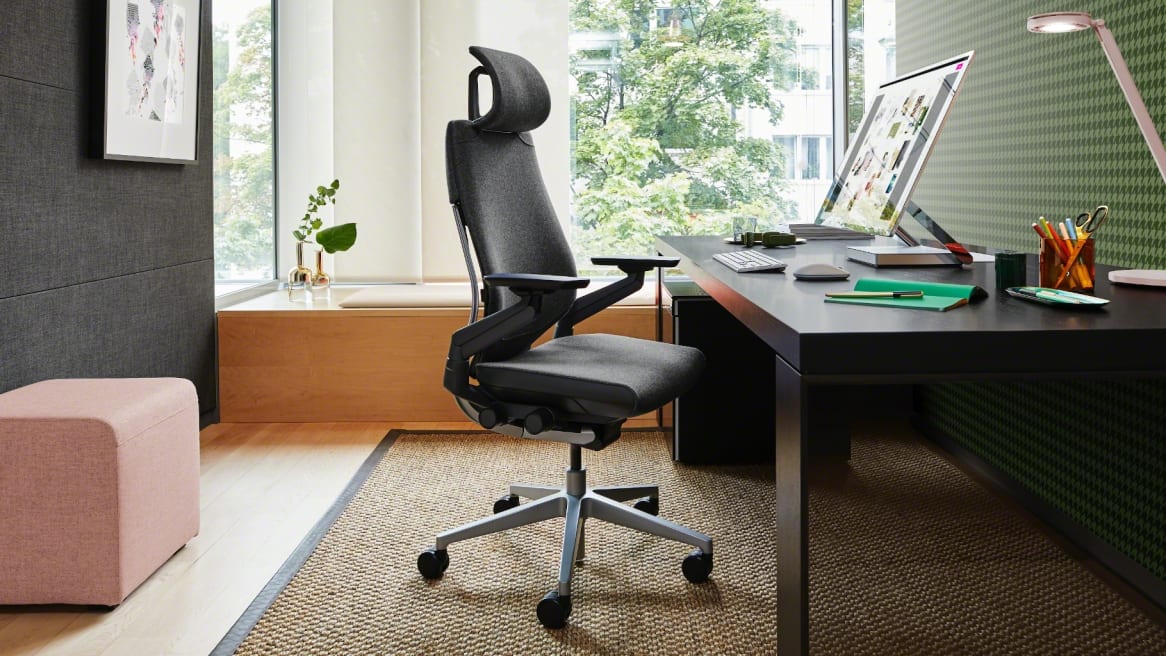
Strengths: A 6'5" IT developer who reviewed the Liberty praised its all-day comfort, and several larger reviewers said it suited them after struggling to find chairs that fit. Humanscale rates it for 400 lb. Reviewers describe the way the tri-panel mesh back wraps around the body as incomparable to other chairs. The automatic recline responds to body weight without fiddling with levers, making it intuitive for users who want support without manual adjustments.
Weaknesses: Some shorter reviewers report fit issues: they found the seat too deep and the lumbar support too low for them. The mesh backrest can lose firmness over time—one user reported it becoming loose after 3.5 years of part-time use, compounded by poor warranty service. The chair lacks a built-in headrest, forcing some users to retrofit aftermarket solutions. Multiple reviews note a lack of adjustability features, particularly for seat depth (Humanscale's US shop lists a 16.5–18.75 in seat depth).
Steelcase Gesture — strengths & weaknesses
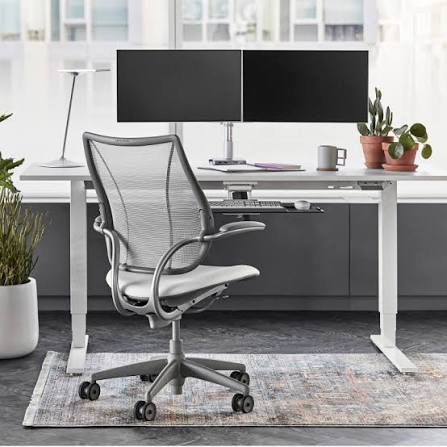
Strengths: The Gesture delivers comprehensive adjustment options covering all major ergonomic parameters, earning it a detailed professional review by a certified ergonomics expert. Its narrower backrest allows shoulder and back freedom without the claustrophobic feeling some users experience in wider chairs. The 360-degree armrests adapt to different device usage—from keyboard to tablet—supporting multi-posture work. Several reviewers noted the chair performed well initially, with one user choosing it after trying six different chairs in two months.
Weaknesses: Long-term durability is a major concern. One owner reported extreme buyer's regret after all four purchased units experienced breakdown issues within three years. Despite the premium price, some users felt the chair looks cheap and budget-like. The chair's posture-correcting design isn't immediately comfortable; one reviewer noted it "pushes user into upright position" with an "auto-correction feel," requiring an adjustment period to find optimal lumbar settings. The comprehensive adjustability that some users praise also means more time spent tweaking settings.
How they differ
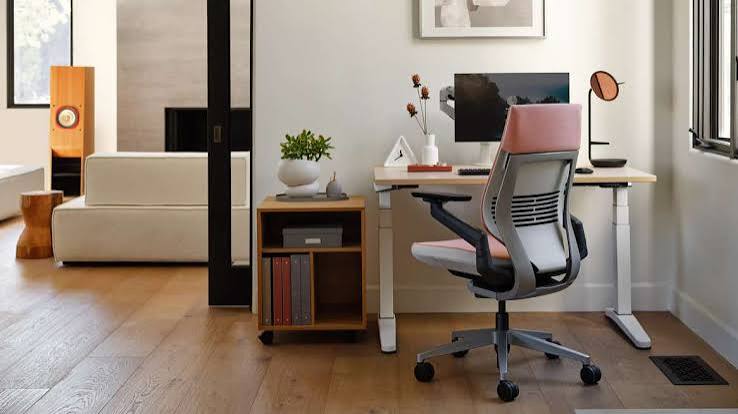
The core trade-off is automatic simplicity versus manual control. The Liberty uses body weight to drive recline and support, offering minimal levers and dials. The Gesture hands you granular control over every parameter but demands you actually use those controls to find your fit.
Tall reviewers praise the Liberty and some smaller reviewers report fit problems. On paper, both are rated for 400 lb; Humanscale lists a 16.6–20.9 in seat height and a 16.5–18.75 in seat depth for the Liberty, and Steelcase lists a 16–21 in seat height and a 15.75–18.5 in functional seat depth for the Gesture.
Durability complaints plague both, but differently. Liberty users report mesh degradation and poor warranty support. Gesture owners report structural breakdown across multiple units. Neither inspires confidence for long-term investment, despite long warranties (15 years on the Liberty, 12 years on the Gesture).
The Gesture gives you manual recline tension and back stops; the Liberty gives you weight-sensitive recline with no manual tension controls and the wraparound mesh that tall reviewers praise.
Who should buy which
Buy the Humanscale Liberty if: You want a chair that just works without adjustment fiddling, within its 400 lb rating. You prioritize that wraparound mesh feeling and plan to use the chair primarily for relaxing or leaning back during focused work. You're comfortable adding an aftermarket headrest if needed.
Buy the Steelcase Gesture if: You work across multiple postures—leaning forward for keyboard work, sitting back with a tablet, shifting throughout the day. You're willing to spend time dialing in adjustments and prefer manual control over automatic response. You want precise lumbar positioning and shoulder freedom matters to you.
Consider neither if: You need proven long-term durability with responsive warranty support. You want immediate comfort without an adjustment period.
The verdict
These chairs deliver opposite experiences. The Liberty suits buyers who want effortless, weight-sensitive recline and don't mind limited adjustability. The Gesture suits multi-posture workers who want granular control and can tolerate a break-in period. Both draw durability and price-to-value complaints in reviews.
If you want to sink into mesh that adapts automatically, consider the Liberty. If you switch between devices all day and need armrests that follow, consider the Gesture. Just know that in either case, you're gambling on longevity despite the premium price and long warranties.
Frequently asked
- Is the Humanscale Liberty better than the Steelcase Gesture?
- The Liberty uses weight-sensitive recline with no manual tension controls, while the Gesture offers a manual recline range with three recline stops; both are rated for 400 lb. Both face durability concerns in reviews.
- Which chair has better long-term durability?
- Both chairs show durability issues in reviews. One Liberty owner reported the mesh loosening after 3.5 years of part-time use and poor warranty service, while one Gesture owner reported all four of their chairs breaking down within three years. Neither has a clear durability advantage.
- Are these chairs good for shorter users?
- Some shorter reviewers found the Liberty's seat too deep. Neither brand publishes a user-height range in our sources: Humanscale's US shop lists a 16.6–20.9 in seat height and a 16.5–18.75 in seat depth for the Liberty; Steelcase lists a 16–21 in seat height and a 15.75–18.5 in functional seat depth for the Gesture.
Affiliate links: we may earn a commission from qualifying purchases. Check current delivery, return and warranty terms on Amazon.
Swap in a similar chair
Compare Humanscale Liberty with
Compare Steelcase Gesture with
More comparisons
- Humanscale Liberty vs Herman Miller Aeron Load capacity: 400 lb on Humanscale Liberty; 300 / 350 / 400 lb on Herman Miller Aeron.
- Humanscale Liberty vs Steelcase Leap V2 Humanscale Liberty lists at $1,613 – $2,326; Steelcase Leap V2 at $1,499 – $2,667 (official stores).
- Steelcase Gesture vs Sidiz T80 Headrest: Optional on Steelcase Gesture; Headrest height / angle adjustment on Sidiz T80.
- Steelcase Gesture vs Herman Miller Sayl Load capacity: 400 lb on Steelcase Gesture; 350 lb on Herman Miller Sayl.
- Steelcase Gesture vs Kokuyo Ing Headrest: Optional on Steelcase Gesture; With-headrest type on Kokuyo Ing.
- Steelcase Gesture vs Okamura Sylphy Arms: Width 10.25–22.5 in between arms on Steelcase Gesture; Adjustable arms: 100 mm height on Okamura Sylphy.